Design process

How I Design

Two parts of my design work I can show: building with design systems, and making the case to engineering.

Most of my design work has happened inside systems I did not choose: SAP Fiori at Union Pacific, a three-platform shipping stack at ShipDeez, an existing design system at CUNA. I use research to find out how the work really happens, then look for the smallest design that fits the system it has to live in. The decision comes first, and the research is the evidence behind it.

At Union Pacific the business team asked for an Excel upload. I weighed four options with engineering, and we built a custom Fiori application instead. Bulk entry kept the data structured as it went in, which answered the concern behind the upload request.

01. Design systems

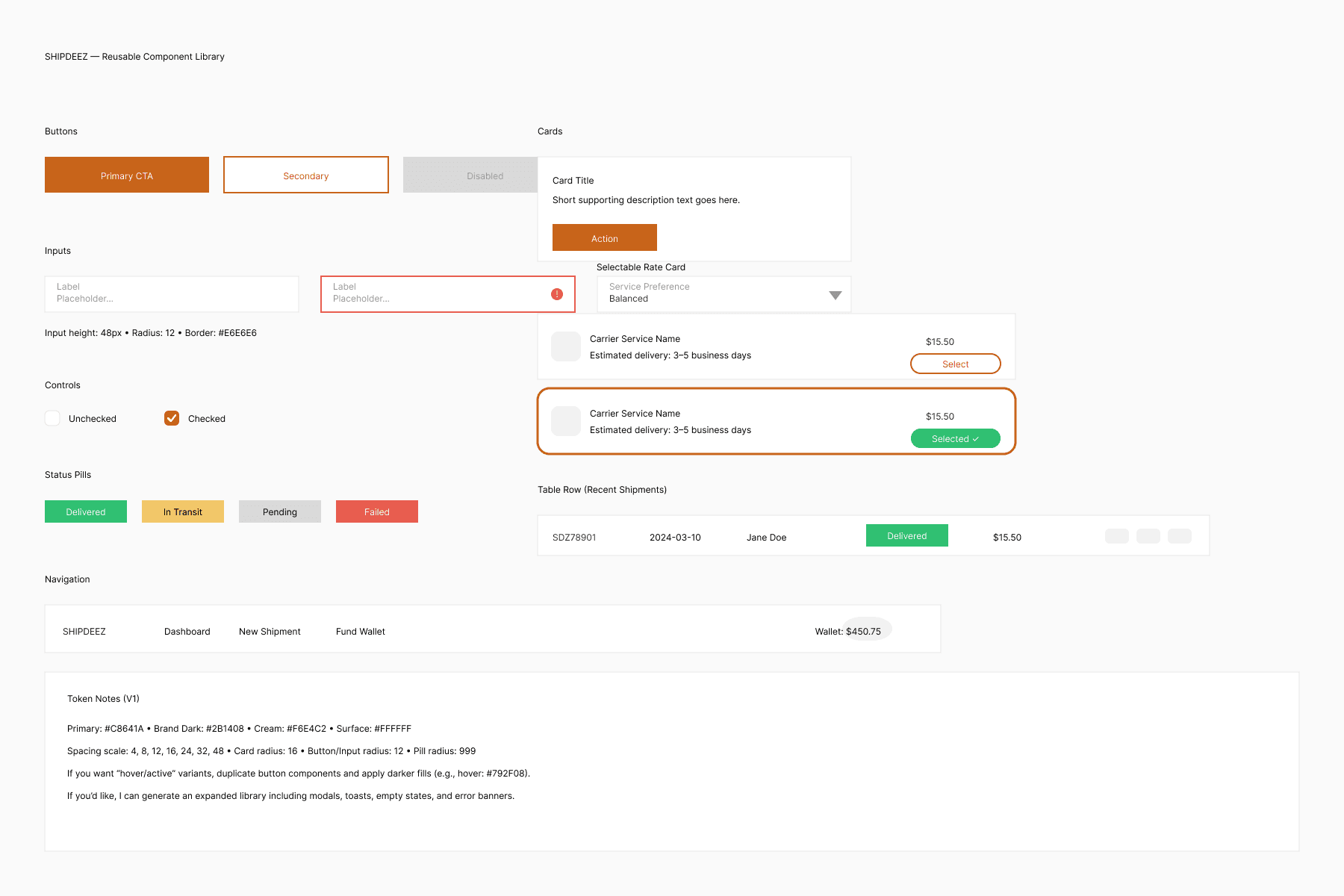
I have built a design system and I have worked inside existing ones, and they teach different things. At ShipDeez there was no brand at all, so I built the system alongside the product as the sole designer, in a 10 business day contract: color, type, spacing and a component library.

The semantic colors map to shipping states. Green marks a created or delivered label, gold marks a low wallet balance, and red marks an address or payment failure, so a user can scan an operational screen without decoding status labels. The spacing uses a 4px base unit so dense tables and payment summaries still line up.

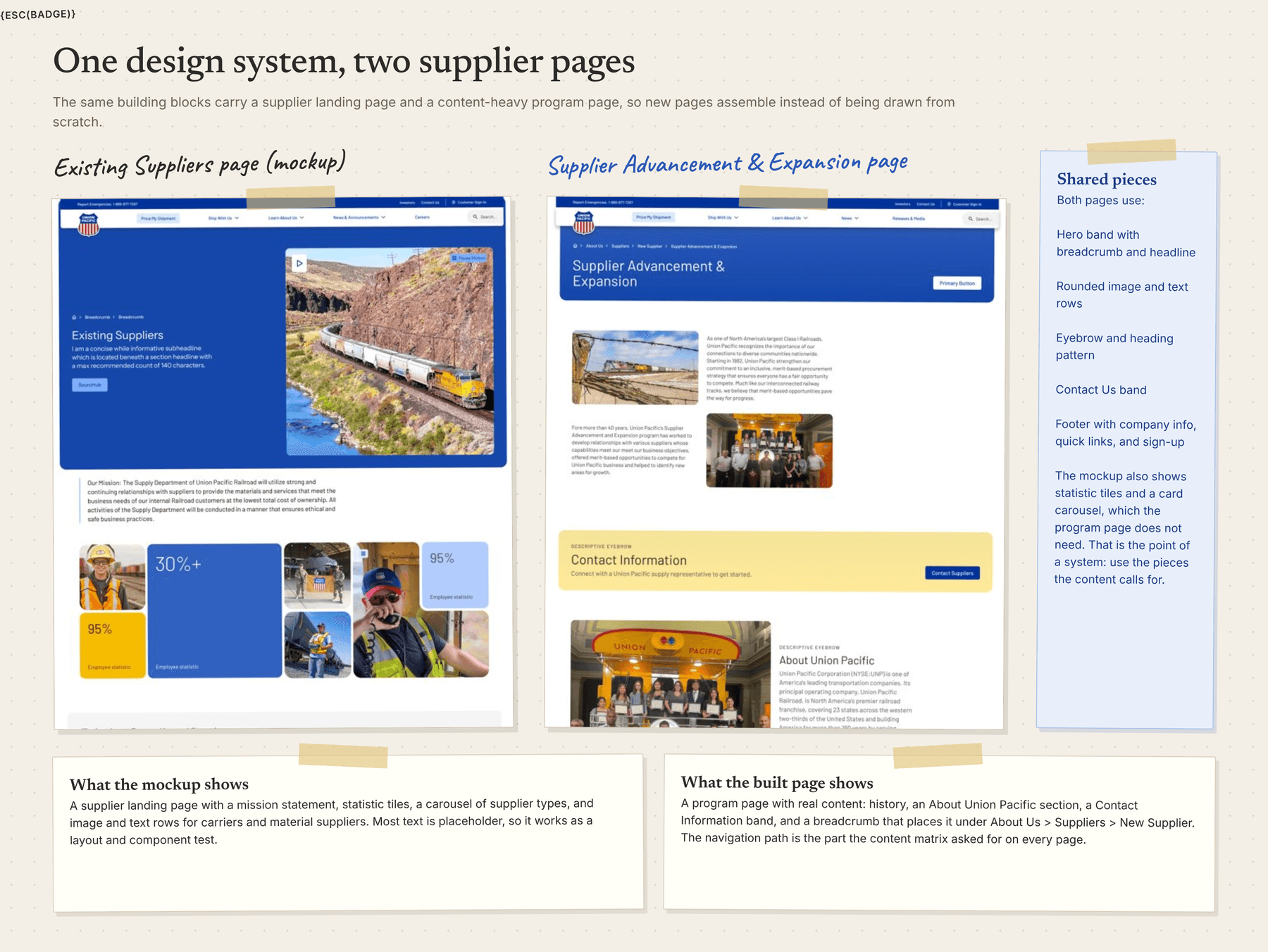
At Union Pacific the system did a different job. New supplier pages were assembled from known pieces instead of being drawn from scratch. At CUNA I used the existing design system to create wireframes that put the research results into screens, which you can read about in the CUNA case study.
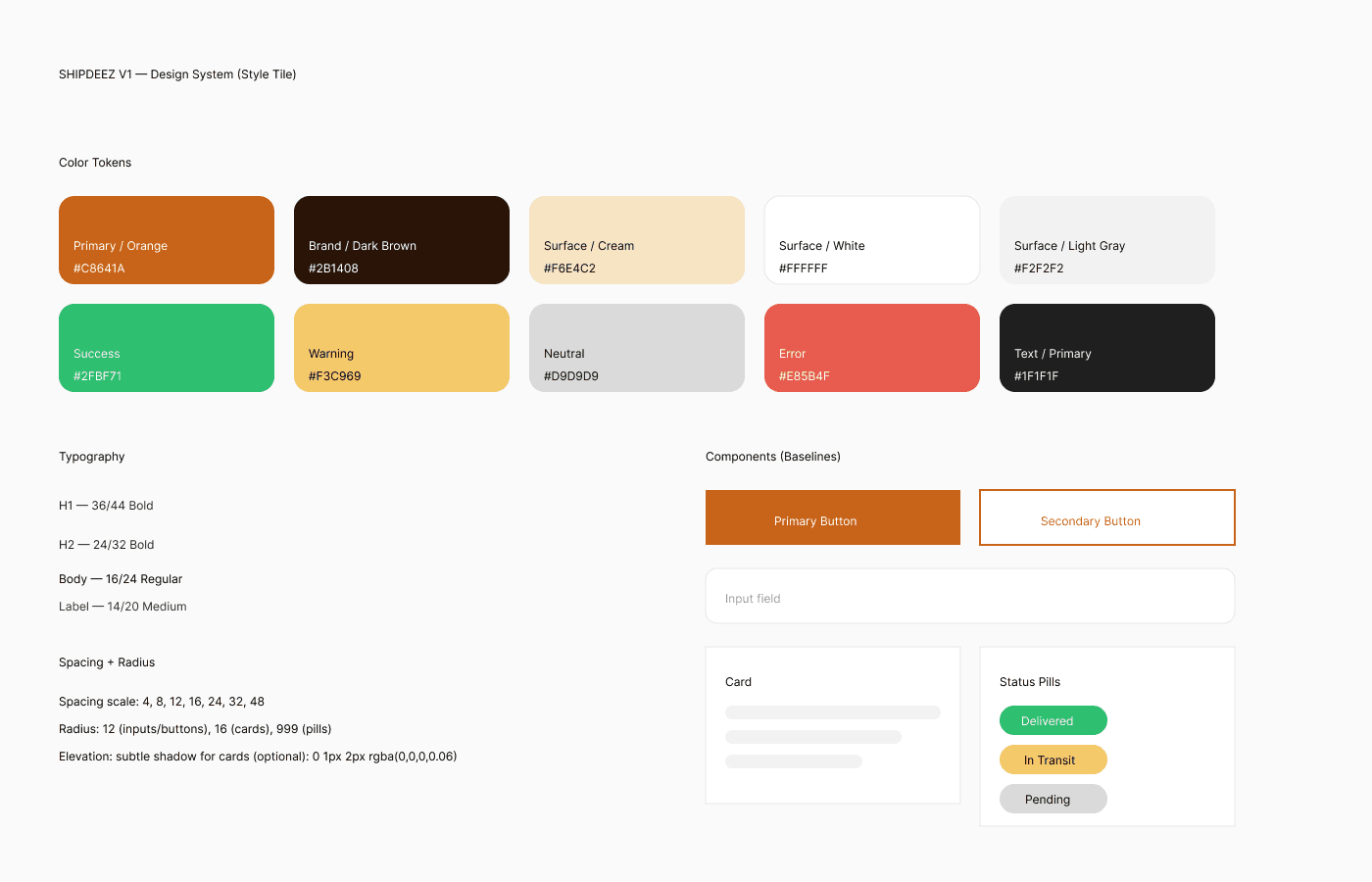
ShipDeez design system style tile showing color, type scale and spacing tokens
ShipDeez style tile: color tokens, type scale and spacing, built alongside the product.
ShipDeez component library with buttons, inputs, rate cards and status pills
ShipDeez component library: buttons, inputs with error states, selectable rate cards and status pills.
The existing Union Pacific supplier page mockup beside the built Supplier Advancement and Expansion page, with shared design system pieces called out
Union Pacific supplier pages: the existing mockup beside the built page, with the shared design system pieces called out.
02. Making the case

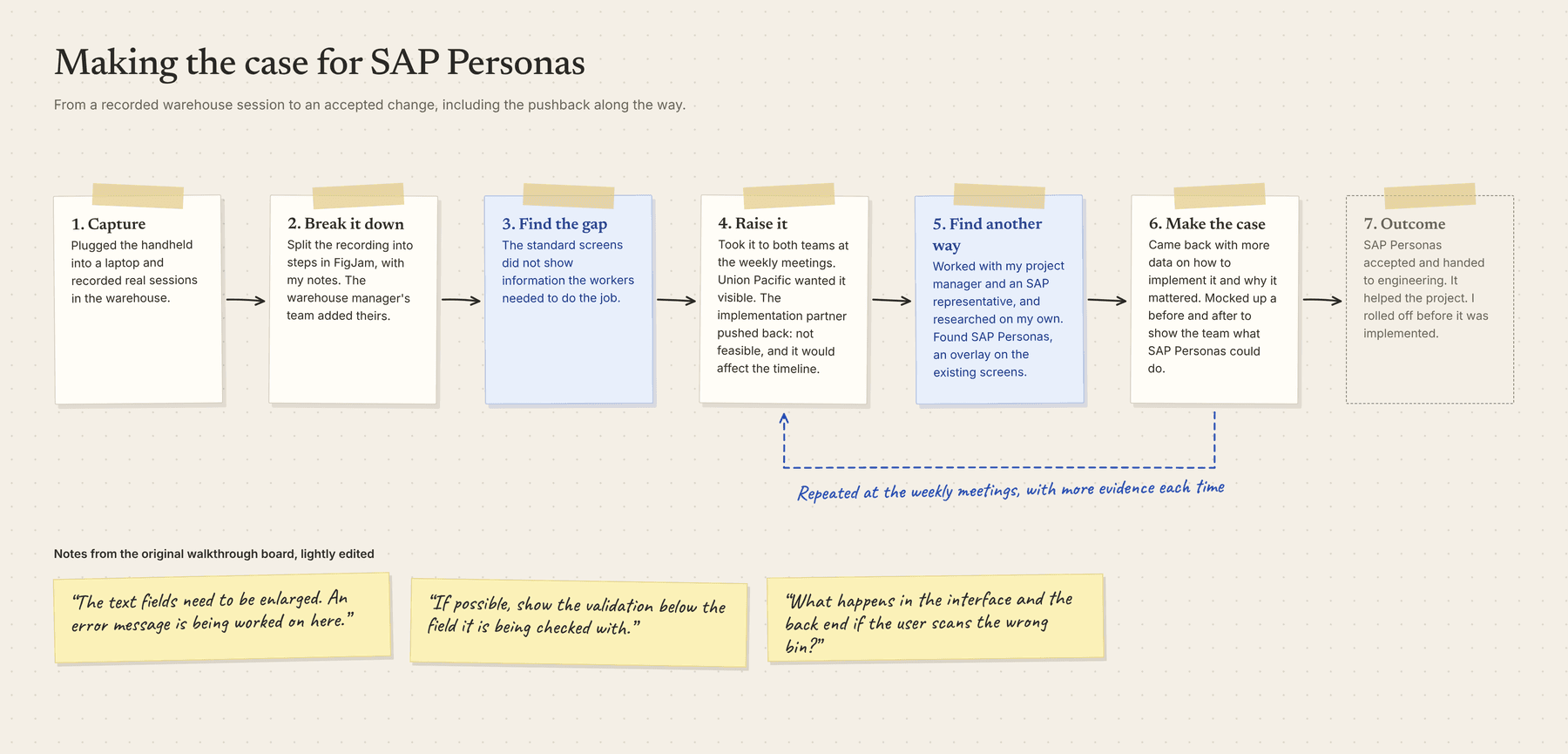
Some of the most useful design work I have done was persuading people, not drawing screens. Warehouse staff at Union Pacific used handheld scanners that ran standard SAP screens. I watched the work in three warehouses, and the standard screens left out information the workers needed.

The implementation partner said showing it was not feasible and would affect the timeline. So I found another route, SAP Personas, mocked up a before and after, and took the case back to the weekly meetings more than once. It was accepted and handed to engineering. I rolled off before it was implemented, so I cannot speak to how it turned out in use.

The bigger lesson was about process. I was reviewing technical specs after the decisions had been made, and my feedback went nowhere. We asked for the partner's process outline, saw that the fit-or-custom decisions happened earlier, and asked to join those conversations. We were added.

Recreation of the SAP Personas case: the steps from floor recordings to the handoff to engineering
Recreation. Client names and data removed. The steps from floor recordings to the handoff to engineering.

Each of these has a full case study with the decisions, the trade-offs and what I would do next.